Oxford & Loom may earn a commission or have a financial relationship with brands featured on this site, including brands under common ownership. See our Advertising Disclosure.
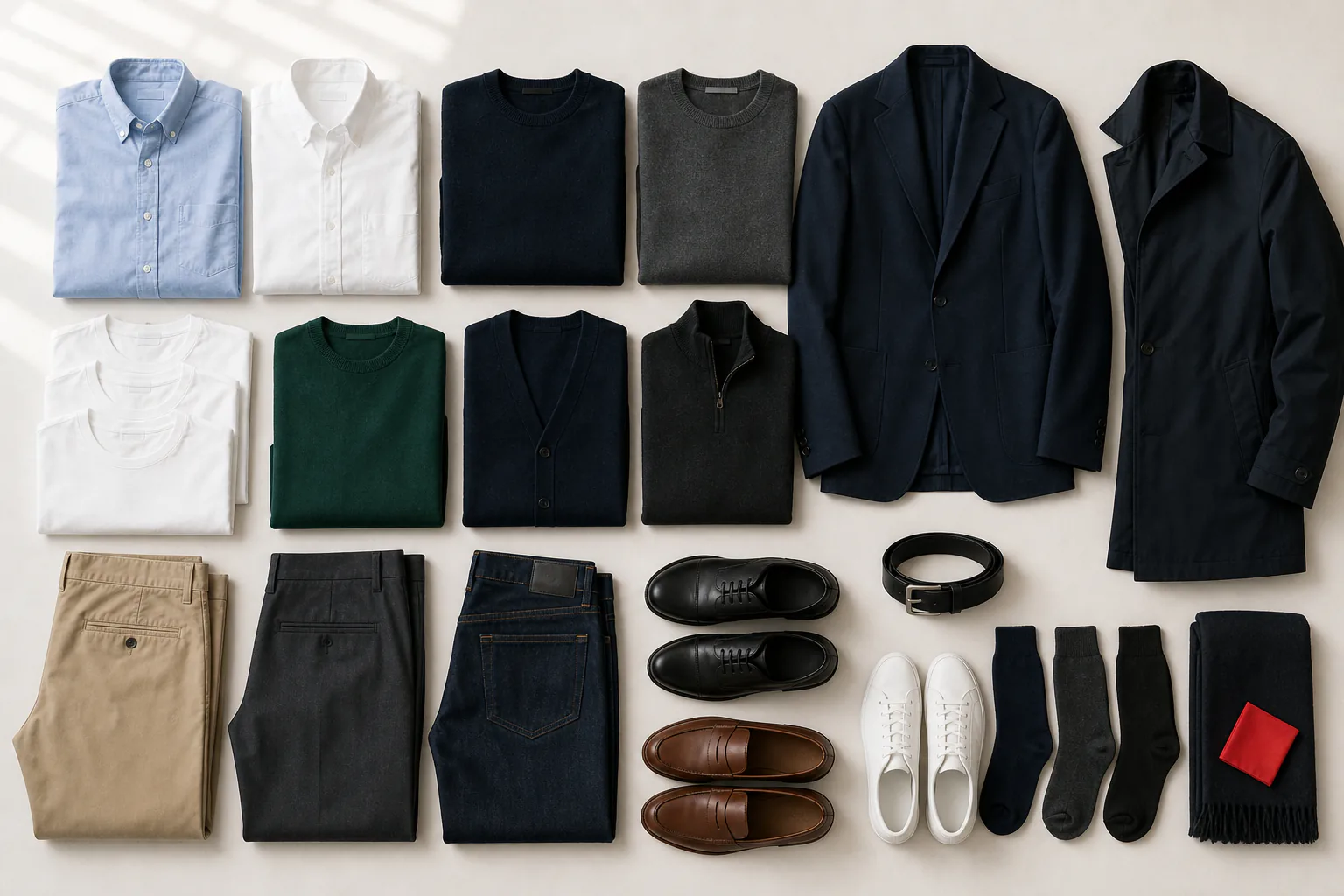
A capsule wardrobe combines pieces that work with nearly everything else you own, which matters more than owning less for its own sake, so getting dressed stops being a daily decision and starts being a formality. The list below covers twenty pieces built to carry a normal week: the office, a dinner out, a weekend, a flight, all without duplicating anything or leaving gaps.
Buy trend pieces later, if at all. Build the foundation first, and the rest of the wardrobe gets easier to plan around.
This isn't a minimalism exercise. Some men will land closer to thirty pieces once they add a second suit or a heavier winter coat, and that's fine. The number twenty is a floor, not a ceiling. It's the smallest set of clothing that still covers a full week without repeating an outfit or reaching for something that doesn't match anything else in the closet.
The five pieces to buy first
If you own nothing else on this list, own these five. They get worn on the most days and pair with the widest range of everything else you add later.
- A white or light blue oxford shirt, the single most useful shirt a man can own and worth reading up on before you buy your first one.
- A pair of mid-grey or navy wool trousers, cut slim through the leg without being tight.
- Dark, straight-leg jeans with no fading, whiskering, or distressing.
- A pair of brown leather derbies or a plain-toe blucher that works with both trousers and jeans.
- A navy crewneck sweater in merino or a merino blend.
Wear those five for two weeks in rotating combinations and the logic of a capsule wardrobe becomes obvious: fewer choices, and somehow better outfits.
The full twenty
Once the five foundation pieces are in place, round out the rest of the list. Every item below is chosen to combine with at least three others on it, which is the real test of whether something belongs in a capsule wardrobe.
Shirts and tops (6)
- White oxford shirt
- Light blue oxford shirt
- Two solid crewneck tees, one white and one navy
- A grey merino crewneck sweater
- A chambray or denim shirt for layering over a tee
Bottoms (4)
- Mid-grey wool trousers
- Navy trousers or chinos (see our chinos vs. dress pants breakdown if you're deciding which to buy first)
- Dark, straight-leg jeans
- Stone or khaki chinos
Outerwear (3)
- A navy or olive field jacket
- A charcoal wool overcoat
- A quilted or waxed vest for in-between weather
Shoes (3)
- Brown derby or plain-toe blucher
- White leather sneakers
- Suede chukka boots or loafers
Basics and accessories (4)
- A brown leather belt that matches your shoes
- A week of dress socks and a week of casual socks
- Undershirts and underwear that actually get replaced on schedule, not worn until they fall apart
- A canvas or leather weekend bag
That's twenty categories, not necessarily twenty single items. You'll want two or three tees, for instance, not one. The point is that every piece touches several others, so twenty well-chosen categories produce more usable outfits than twenty pieces picked at random ever could.
Why twenty pieces actually cover a full week
Picture the math for a moment. Five tops, four bottoms, and three pairs of shoes already gives you more combinations than most men wear in a month, before a jacket or sweater enters the picture as a fourth variable. The overlap is the entire point: a piece that only goes with one other item is a liability, not an asset, no matter how much you like it on its own.
That's also why the list skips categories like patterned dress shirts, colored trousers, or statement jackets. They photograph well but they only solve one outfit at a time. A wardrobe built on overlap solves dozens.
The order to buy them in
Buy neutral first. A capsule wardrobe usually fails at the buying stage, when someone reaches for the interesting piece before the boring one: a patterned shirt before a white one, colored trousers before grey ones. Interesting pieces have one or two uses. Neutral pieces have a dozen.
Start with the five foundation pieces above. Add the second oxford shirt and the jeans next. Outerwear comes last. One good jacket covers most of the cold months, and it's the easiest category to wait on until you find one worth the price.
Spread the purchases out if the budget calls for it. A capsule wardrobe assembled over three or four months, bought one considered piece at a time, tends to fit better and last longer than one bought in a single weekend just to check a box.
What to leave off the list
A few categories show up in a lot of wardrobe advice but don't belong in a starter capsule:
- A matching suit, bought as a set before you know how often you'll actually wear a suit
- Novelty prints or statement colors you'd only wear once a season
- A second pair of dress shoes before the first pair has been resoled once
- More than two jackets in the same weight and color
None of these are bad purchases. They're simply not starter purchases. Add them once the twenty pieces above are worn in and you actually know what's missing.
Bottom Line
Twenty well-chosen pieces get you through more of the year than forty mismatched ones. Buy the boring pieces first, replace the basics on an actual schedule instead of ignoring them, and let the rest of your shirts and tops collection grow slower and more deliberately from here.