Oxford & Loom may earn a commission or have a financial relationship with brands featured on this site, including brands under common ownership. See our Advertising Disclosure.
Fall dressing gets complicated when people try to solve for the whole day at once. The fix is a formula, not a wardrobe overhaul: a base layer, a mid layer, and an outer layer, each doing one job, so you can add or remove a piece as the temperature moves without ever looking underdressed or overdressed.
The formula
Every fall outfit that works is built from three layers stacked in order:
- Base: a t-shirt or lightweight shirt that sits against your skin and manages sweat.
- Mid: the layer that actually keeps you warm, whether that's a shirt, sweater, or flannel.
- Outer: a jacket or coat that blocks wind and rain, worn only when the weather calls for it.
The formula works because each layer can come off on its own. Warm afternoon on a cool morning commute means you shed the outer layer at your desk and keep the other two. A colder-than-expected evening means the outer layer goes back on over everything else. Nothing about the outfit needs to change to handle a ten-degree swing.
Layer one: the base you barely notice
The base layer's only job is to sit against your skin comfortably through a day of temperature changes, which makes fabric the whole decision here. Cotton holds onto sweat once you've warmed up outdoors and cools uncomfortably fast when you step inside. A wool base layer manages that transition far better, which is the entire subject of our merino wool vs. cotton breakdown if you want the full comparison.
For most fall days, a mid-weight base is enough. Save the heavier thermal-weight options for the coldest mornings, since anything thicker than you need under a mid layer just traps heat you'll want to shed by midday.
Layer two: where most outfits go wrong
The mid layer is doing the actual work of keeping you warm, and it's also the layer most men either skip or overload. A single mid layer, chosen with a bit more warmth than the day seems to need, beats two thin ones stacked on top of each other. Bulk under a jacket looks sloppy and restricts movement in the shoulders.
An oxford shirt is one of the better mid-layer choices in early fall, since it has enough structure to hold its shape under a jacket without adding real bulk. We cover why it earns that role in our full guide to the oxford shirt. As the weather cools further, swap it for a lightweight sweater or a flannel shirt in the same slot. Our shirts and tops coverage runs through more mid-layer options beyond the oxford.
Layer three: match the outer layer to the day, not the season
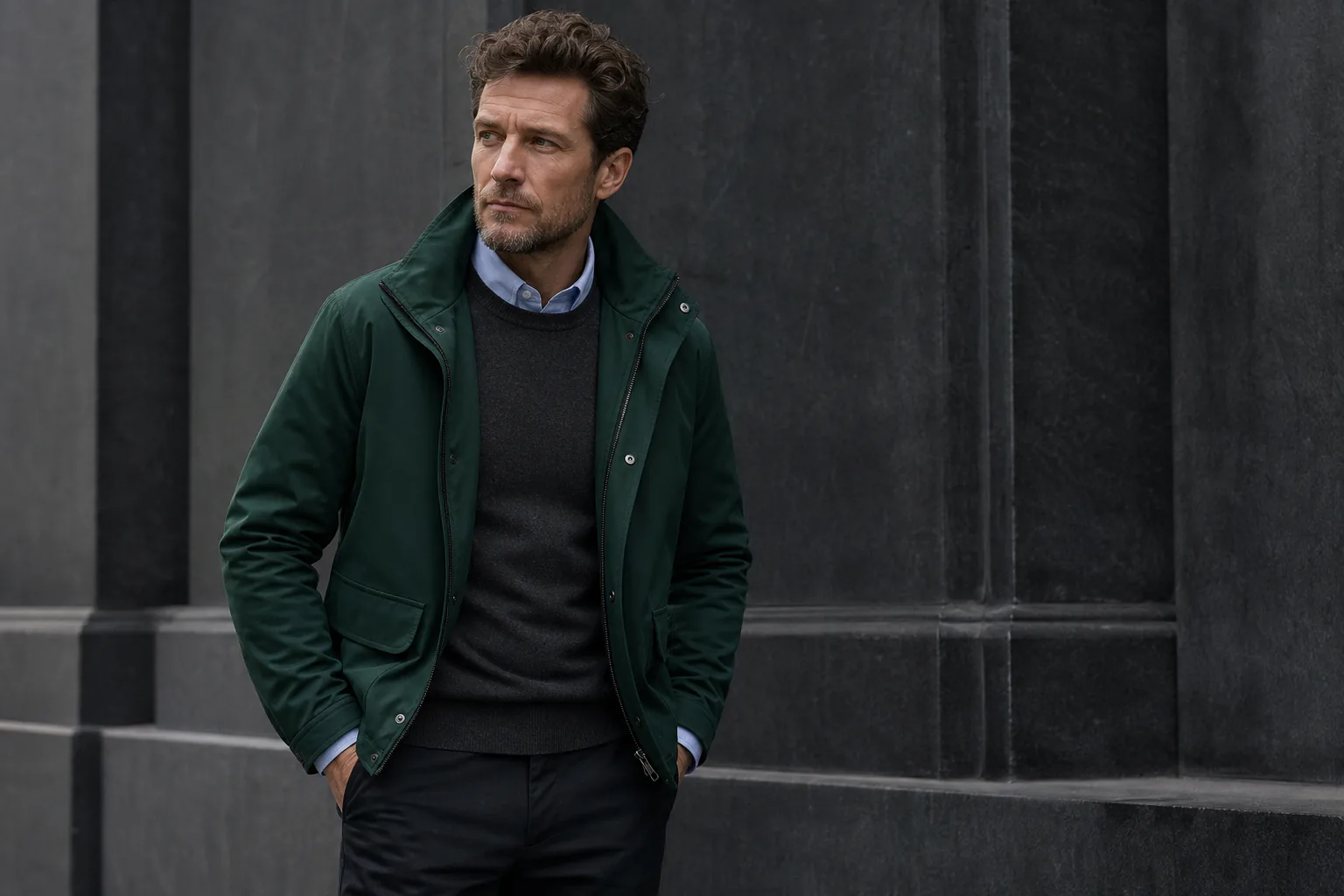
The mistake here is picking one coat and wearing it for the entire season regardless of the actual forecast. Early fall calls for something closer to a field jacket or unlined chore coat: enough to cut wind, not enough to trap heat on a fifty-degree afternoon. Late fall is when a proper wool topcoat or heavier shell earns its place.
If you travel during the season, the formula is also the easiest way to pack light, since three modular layers cover more temperature range than five single-purpose pieces. Our one-bag packing list leans on the same logic for a week away.
Building fit around layers
Fit needs to account for what's underneath. A mid layer sized to fit perfectly on its own will feel tight and look strained once an outer layer goes over it. The usual fix is sizing the outer layer with a little more room through the chest and shoulders than you'd choose if you were only ever wearing it alone, while keeping the base and mid layers close to the body so the whole stack doesn't turn bulky.
Sleeve length matters more in a layered outfit than in a single-layer one. Aim for each visible layer to show slightly more cuff than the one over it: base layer peeking past the mid layer, mid layer peeking past the outer layer. That small detail is what makes a layered outfit read as planned rather than accidental.
Texture does more work than color
Fall is the one season where color matters less than most people assume, because texture carries the visual interest instead. A flannel mid layer under a smooth canvas jacket already reads as considered, even in a single color family like navy or olive. Save the bold color choices for a single piece, usually the outer layer, and let the other two layers stay quiet in neutrals.
This also solves the problem of owning too many pieces. A base layer in white, gray, and navy; a mid layer in two or three flannels or knits; and one or two outer layers will recombine into more outfits than a closet full of single-purpose sweaters ever will.
Common mistakes worth avoiding
A few habits undercut the formula more often than anything else:
- Wearing a heavy coat as if it were the only layer, then sweating through it indoors because there's nothing to remove.
- Choosing a mid layer for warmth alone and ignoring how it looks once the outer layer comes off at a desk or restaurant table.
- Buying an outer layer sized for how it looks in a mirror at home, with nothing underneath it to account for.
Each of these comes back to the same root cause: dressing for one moment in the day instead of the whole day. The formula exists specifically to avoid that.
Bottom Line
Pick a base that manages sweat, a mid layer that does the actual warming, and an outer layer sized for what's underneath, and swap pieces in or out as the day moves rather than dressing for a single temperature. The formula holds from the first cool morning in September through the coldest week of the season.