Oxford & Loom may earn a commission or have a financial relationship with brands featured on this site, including brands under common ownership. See our Advertising Disclosure.
A week away runs on a small number of pieces that layer with each other, launder easily, and don't look like you're wearing the same shirt every day, even when you basically are, rather than on packing seven separate outfits. This is the list we actually pack, built to fit in one carry-on and cover business, dinner, and travel days without a single checked bag.
The core rotation
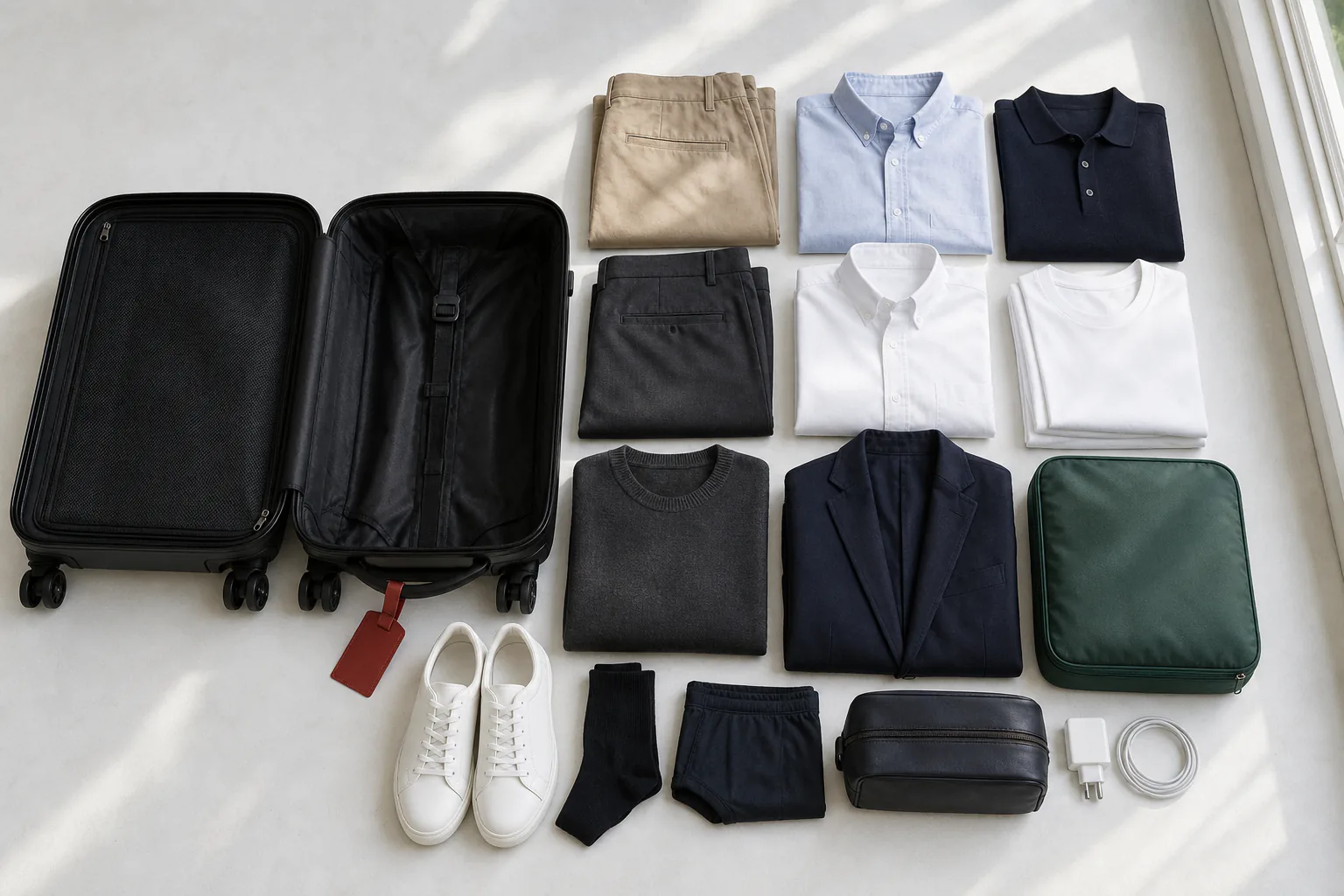
Everything below fits in a 35-to-45-liter bag with room for a jacket and a pair of shoes. The math works because every piece is chosen to combine with at least three others.
- 2 pairs of trousers: one chino, one darker cotton or wool blend
- 3 shirts: two button-ups, one knit polo or henley
- 1 versatile layer: an unstructured blazer or a merino sweater
- 4-5 tees or undershirts
- 1 pair of shoes worn on the plane, 1 packed pair
- 7 pairs of socks and underwear, or 4 pairs plus a sink wash
This is the same logic behind a good 20-piece capsule wardrobe: fewer pieces, chosen for how many outfits they combine into, rather than a fresh look for every day.
Choose one shoe, wear it on the plane
The single heaviest, bulkiest item in most bags is a second pair of shoes. Cut that down by choosing one pair that covers both dress and casual needs. A clean leather sneaker or a minimal derby works with chinos, trousers, and a blazer alike. Wear the bulkier pair through the airport and pack a lighter second option, like a packable slip-on, only if the trip calls for both a dress shoe and something for walking.
Layering instead of packing for weather
Rather than packing separate outfits for warm and cool days, build in layers that adjust to the temperature. A tee under a shirt under a sweater covers a 20-degree swing without adding a single extra piece. We break down this approach in more detail in layering for fall, and the same formula holds for travel: base layer, shirt layer, insulating layer, and a weatherproof outer layer if the destination calls for it.
A sample seven-day rotation
To see how the math works in practice, here's how twelve pieces stretch across a full week without repeating an obvious combination:
- Day 1: button-up, chinos, sneaker
- Day 2: polo, darker trousers, same sneaker
- Day 3: tee under the sweater layer, chinos, sneaker
- Day 4: button-up (rewear), darker trousers, dressier evening option with the blazer added
- Day 5: polo (rewear), chinos, sneaker
- Day 6: tee under the blazer, darker trousers, the dressiest combination for a dinner or event
- Day 7: button-up, chinos, travel home in the same sneaker worn on the way out
Nothing repeats back-to-back, and the blazer only shows up twice, both times paired with a different shirt underneath it.
Fabric choices that actually matter for travel
Wrinkle resistance and quick drying matter more on the road than they do at home. A few fabric notes worth building the list around:
- Merino wool tees and base layers resist odor across multiple wears without a wash, which matters when laundry access is limited.
- Ponte or performance-blend trousers hold a crease better than cotton twill after being folded in a bag for hours.
- A packable knit blazer resists wrinkling far better than a structured, canvassed one.
If you're deciding what to wear against your skin for the trip, our merino wool vs. cotton comparison covers exactly this trade-off: cotton is cheaper and cooler in humidity, merino travels better across multiple wears.
Non-clothing items worth the space
The list above covers what you wear, but a handful of non-clothing items make a bigger difference than most travelers expect:
- A collapsible garment fold or packing cube to keep the one blazer from creasing against everything else
- A small laundry bag for worn items, separate from clean clothes
- Travel-size detergent sheets or pods, if you plan to sink-wash instead of packing seven days of underwear
- A slim, low-profile charger and cable kit rather than the full desk setup
Our accessories coverage runs through more of these small details, from socks to leather goods, worth building into a kit this size.
Laundry on the road
A week is short enough to skip a laundromat entirely if you plan for it. Pack four to five days of socks and underwear and sink-wash the rest overnight in the hotel room, hanging items near an air vent or fan to speed drying. Merino base layers are especially suited to this approach, since they resist odor across multiple wears and dry faster than cotton after a rinse.
For trips longer than a week, build in one full laundry day rather than trying to stretch four shirts across ten days. Overpacking to avoid laundry usually costs more bag space than the laundry itself would cost in time.
Packing the bag itself
Roll rather than fold for anything that isn't structured: shirts, tees, and underwear all compress better rolled. Reserve folding for the blazer and any trousers with a crease worth protecting, laid flat along the bottom of the bag. Shoes go in first, stuffed with socks to save space, positioned along the wheels or base where the bag is sturdiest.
What to leave home
A one-bag trip works because of what stays out of the bag as much as what goes in. Skip a backup belt if the one you're wearing already matches both pairs of trousers and the packed shoes. Skip a second jacket unless the itinerary actually spans both a boardroom and a hike. And skip packing "in case" outfits for events that aren't on the calendar yet; add them only once a plan is confirmed.
Bottom Line
A week away needs roughly a dozen pieces, not a suitcase full of single-use outfits. Pick two trousers, three shirts, one layer, and one pair of shoes that all work together, and you'll spend less time deciding what to wear and more time actually being somewhere else.