Oxford & Loom may earn a commission or have a financial relationship with brands featured on this site, including brands under common ownership. See our Advertising Disclosure.
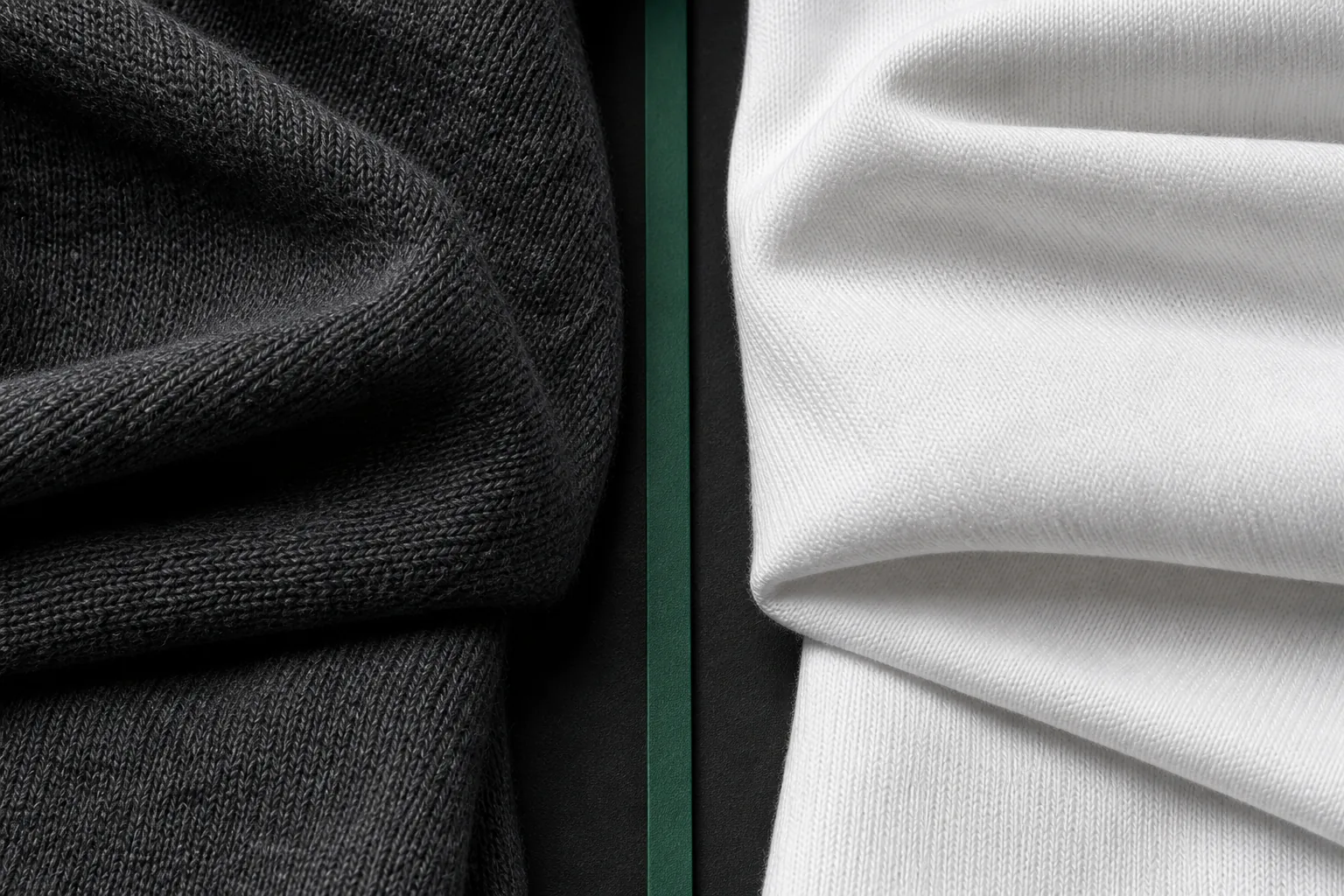
Cotton and merino wool feel similarly soft on a store hanger. They behave completely differently once you've been wearing them for eight hours. That difference, not softness or price, is what should decide which one sits against your skin.
The core difference: what happens when you sweat
Cotton absorbs moisture and holds onto it. Once a cotton t-shirt is damp, it stays damp against your skin until you take it off or it fully dries, and it cools uncomfortably fast the moment you stop moving or step into air conditioning. Merino wool absorbs moisture too, but it wicks it away from your skin and releases it into the air, so the fabric feels dry again well before cotton would.
Merino also insulates when it's wet, which cotton does not. A damp merino layer still holds some warmth. A damp cotton layer loses most of its insulating value and can actively pull heat from your skin, which is the reason hikers avoid cotton in cold, wet conditions and the same logic that applies, at a smaller scale, to a commute in the rain.
Where cotton still wins
None of this makes cotton a bad fabric. It's more affordable, more widely available in the fits and colors you actually want, and perfectly fine for climate-controlled days where you're not sweating heavily or facing weather. A cotton oxford or a cotton t-shirt under a blazer in an air-conditioned office has no real downside.
Cotton is also easier to care for. It tolerates hot water and high dryer heat that would shrink or felt a merino garment, so for anything you're washing constantly, cotton remains the simpler choice.
Where merino wins
Merino earns its higher price on days with real temperature swings or real exertion: a layered fall outfit where you're moving between heated buildings and cold air, a long flight, or any day you're wearing the same base layer for twelve or more hours. It also resists odor far longer than cotton, since the fiber structure that moves moisture away from skin also limits the bacteria that cause odor in the first place, which means fewer washes per wear if you're traveling with a limited rotation.
If you're building a fall wardrobe around the base, mid, and outer layer formula we lay out in our guide to layering for fall, the base layer is exactly where merino's advantages matter most, since it's the layer in direct contact with your skin for the entire day.
Socks are the easiest place to start
If you're not ready to rebuild your t-shirt drawer, socks are the lowest-cost way to feel the difference merino makes, since your feet sweat more per square inch than almost anywhere else on your body and cotton socks show it fastest. A merino or merino-blend sock manages moisture on a ten-hour workday the way a cotton one simply can't, and it's a smaller purchase to test the idea before committing to shirts or base layers. We go through which socks work with which shoes in dress socks vs. athletic socks, and the rest of our accessories guides cover other easy places to start.
If you're ready to upgrade past a drawer of mismatched basics, we put one everyday sock through a two-week wear test to see whether the comfort claims held up past the first wear.
Blends: the practical middle ground
A lot of the best everyday basics split the difference with a cotton-merino blend, usually somewhere between 20 and 50 percent wool. You get some of merino's moisture management and odor resistance along with cotton's lower price and easier care. Blends are a reasonable default if you're not sure which fabric a given piece needs, though for anything doing serious work, a heavy workday, a long trip, a real temperature swing, full merino still outperforms a blend.
Weight matters as much as fiber
Fiber choice only answers half the question. Both cotton and merino come in a range of weights, and matching weight to the season matters more than most people assume. A lightweight merino tee, usually under 180 grams per square meter, works under a shirt in early fall without adding bulk. A heavier merino base layer, closer to 250 grams, is built for the coldest conditions and will feel like overkill on a mild day.
Cotton follows the same logic in reverse. A midweight cotton t-shirt works fine as a warm-weather base layer, but a heavier cotton henley or waffle-knit layered under a sweater traps more heat than most fall days call for. When a garment feels wrong for the season, weight is often the actual problem, not the fiber.
Caring for each fabric
Merino needs a gentler routine than most men are used to. Cold water, a low or no-heat dry, and mild detergent keep it from shrinking or felting. Cotton tolerates hot water and a hot dryer without much complaint, which is exactly why it remains the easier fabric for anything worn and washed on a tight rotation, like gym shirts or undershirts you go through several times a week.
Bottom Line
Choose cotton for comfort in stable, climate-controlled conditions and for anything you're washing constantly. Choose merino for base layers that need to perform through sweat, temperature swings, or a long day without a change of clothes. Once you know which problem you're solving, the fabric choice stops being a debate about quality and becomes a question of what the day actually requires. That's also the moment it's worth checking how often your current basics need replacing, which our guide to replacing socks and tees covers in detail.