Oxford & Loom may earn a commission or have a financial relationship with brands featured on this site, including brands under common ownership. See our Advertising Disclosure.
Sock choice is one of the few decisions that changes based on the shoe rather than the outfit. Loafers, sneakers, and suits each expect a different length, thickness, and finish, and getting it wrong is one of the fastest ways to undercut an otherwise good pair of shoes.
Loafers: no-show or nothing
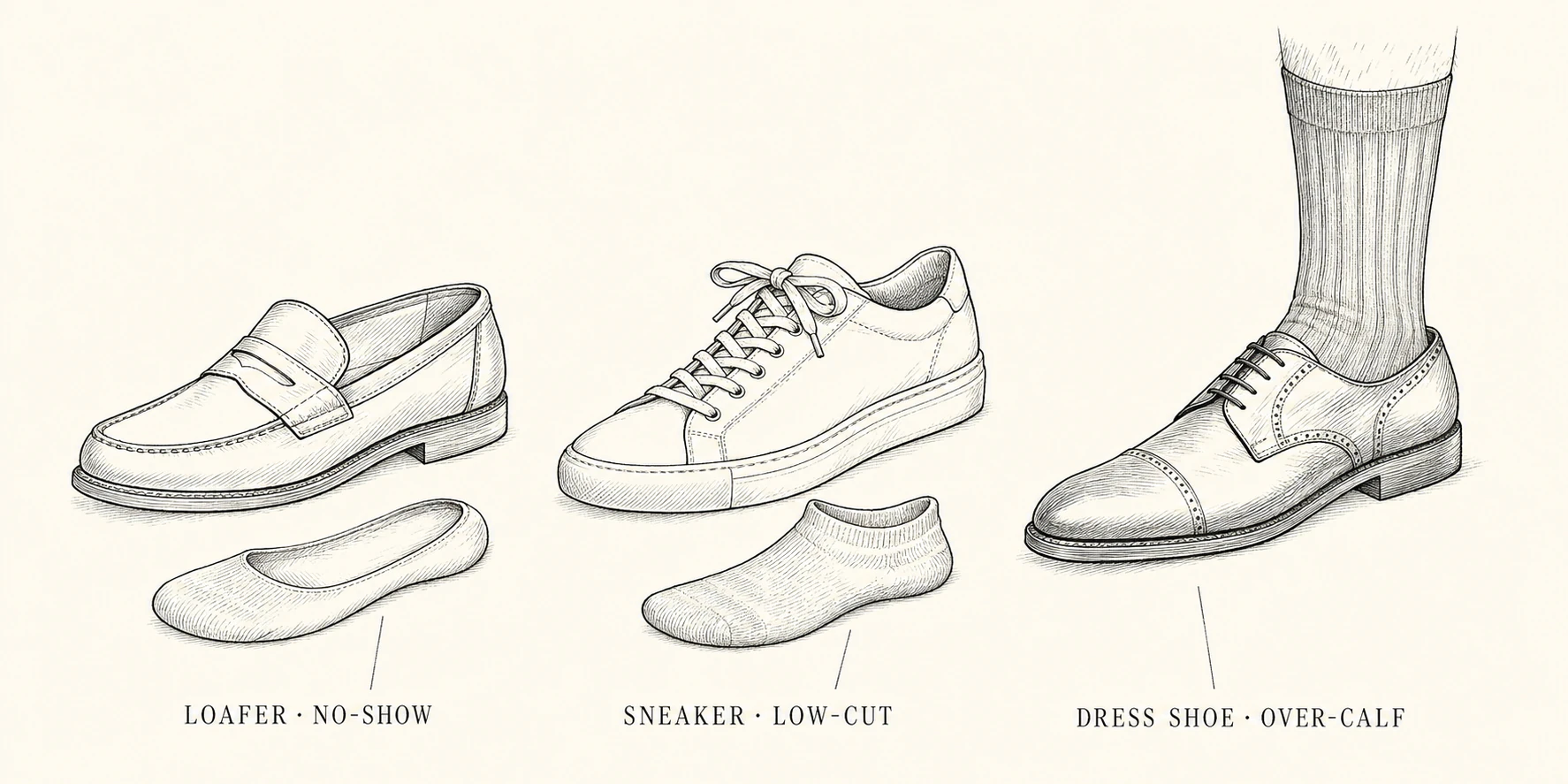
Loafers are built to be worn without visible socks, which means a low-cut, no-show sock is the default choice with chinos or dressed-down trousers. The sock should sit below the ankle bone and stay there, since a no-show sock that slides down inside the shoe defeats the entire purpose of wearing one.
If you're wearing loafers with a suit or dress trousers, a thin dress sock in a color close to your trouser hem is the better call, since bare ankles read as too casual once the rest of the outfit is formal. We cover the full range of loafer styles and when each one is appropriate in the loafer guide.
Sneakers: match the cut to the sneaker's profile
Low-top sneakers pair best with no-show or low-cut socks for the same reason loafers do: anything taller becomes visible above the shoe and breaks the clean line at the ankle. High-top sneakers flip that logic, since a crew sock actually looks intentional peeking above a high collar, while a no-show sock underneath a high-top just looks like an oversight.
If you're building outfits specifically around white sneakers, our guide to how to style white sneakers goes further into which sock heights work with which trouser lengths, since cropped chinos and full-length denim expect different answers.
Suits: over-the-calf is not optional
A dress sock with a suit needs to reach over the calf, not just above the ankle. Crew-length socks ride down when you sit, and the moment you cross your legs, a strip of bare shin shows between your trouser hem and sock, which undoes the effect of an otherwise sharp suit. Over-the-calf socks stay in place through a full day of sitting and standing, which is the entire reason they exist.
Color follows a simple rule here too: match the sock to the trouser, not the shoe. A navy suit gets a navy sock even with black shoes, since the goal is a long, unbroken line from hem to shoe rather than a second point of contrast at the ankle.
Fabric still matters more than most men think
Beyond length, fabric decides how a sock performs across a full day. A wool or wool-blend dress sock manages heat and moisture in a leather shoe far better than plain cotton, especially through a long meeting or a commute. We go through the fabric side of this in more detail in dress socks vs. athletic socks, including why athletic socks and dress socks aren't interchangeable even when the lengths look similar.
If you've been buying socks in bulk multipacks without much thought to any of this, it's worth trying one well-made pair before overhauling the drawer. We put one everyday option through a two-week wear test to see how it held up against a normal rotation of dress shoes, sneakers, and a few long days on your feet.
Boots and casual shoes fall in between
Chukka boots, work boots, and other casual leather shoes sit in a middle zone between loafers and sneakers. A mid-calf sock works well here, since boots often sit higher on the ankle than a low shoe and a no-show sock would leave a gap of bare skin between the sock and the top of the boot. Thickness should scale with the boot: a heavier boot with more room in the toe box handles a cushioned sock, while a slimmer boot needs something closer to a standard dress-weight sock to avoid crowding the fit.
Suede shoes bring one more wrinkle worth knowing. Because suede breathes less than smooth leather in some constructions, a sock with real moisture management matters more here than with a similar dress shoe in calfskin, particularly if you're wearing the same pair for a full workday.
Two mistakes that undo a good outfit
The first is buying one sock length and wearing it with everything, regardless of shoe. A drawer of only crew socks means every loafer outfit gets a visible sock ridge it was never designed to show, and every suit outfit risks a gap of bare shin the moment you sit down.
The second is treating color as the only variable that matters and ignoring length and fabric entirely. A perfectly color-matched sock in the wrong length still ruins the line of the outfit, and a perfectly sized sock in a fabric that traps heat still leaves your feet sweating through a long day regardless of how good it looks. The same three variables, length, fabric, and color, come up throughout our accessories coverage, not just with socks.
A quick reference
- Loafers, casual: no-show, low-cut.
- Loafers, dressed up: thin dress sock matched to the trouser.
- Low-top sneakers: no-show or low-cut.
- High-top sneakers: crew, shown deliberately above the collar.
- Suits: over-the-calf, matched to the trouser color.
Bottom Line
Let the shoe decide the sock. Loafers and low-top sneakers want low-cut or no-show, high-tops want a crew sock worn on purpose, and suits need over-the-calf in a color that matches the trouser. Once the pairing is right, the sock stops being something anyone notices, which is exactly the point.