Oxford & Loom may earn a commission or have a financial relationship with brands featured on this site, including brands under common ownership. See our Advertising Disclosure.
White sneakers are the closest thing menswear has to a universal shoe. They work with suits at the loosest offices, with jeans on the weekend, with shorts in summer. That's also the problem. Because they go with everything, most men wear them exactly the same way, and the shoe stops adding anything to the outfit at all.
Walk down almost any street and the pattern repeats: straight jeans, a plain tee, and the same low-profile white sneaker, worn without much thought about why it works or when it doesn't. The sneaker rarely deserves the blame. What's usually missing is a plan for wearing it well.
The fix isn't a different shoe. It's a handful of choices around the shoe: which pair, how it's paired, and how it's kept up. Get those right and the same white sneaker that everyone else owns starts to look like a decision instead of a default.
None of this requires an unusual shoe or an unusual outfit. It's mostly about paying attention to three things most men skip past: shape, contrast, and upkeep.
Buy a shape, not a logo
Most white sneakers fall into three shapes, and the shape does more for how "considered" an outfit looks than the brand printed on the side.
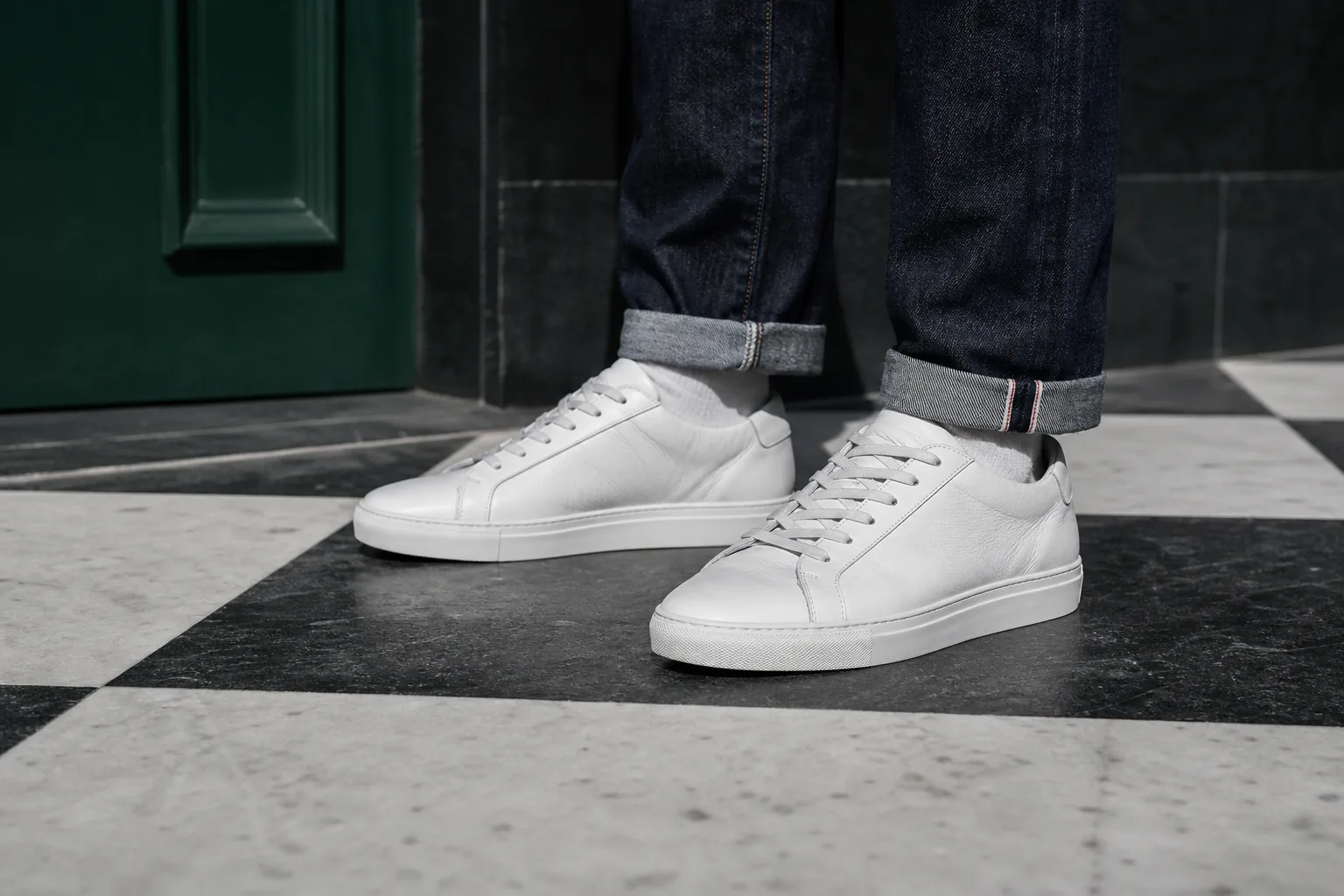
- Minimal leather sneakers: low profile, little to no branding, a clean toe. These pair with almost anything, including tailored trousers.
- Retro court sneakers: a rounder toe and a slightly chunkier sole, borrowed from tennis and basketball shoes of decades past. More casual, more personality.
- Chunky trainers: thick soles, exaggerated proportions. These read as intentionally casual and clash with anything tailored.
Pick one shape based on what the rest of your wardrobe looks like, rather than owning one of each. A minimal leather sneaker will do more work across a capsule wardrobe than the other two shapes combined, since it's the only one of the three that still looks intentional next to tailored pieces.
Sole color matters here too. A white midsole reads cleaner and more formal. A gum or cream sole adds a bit of warmth and casual weight, which works well with denim but starts to look out of place under trousers.
What actually pairs well
The outfits that make a white sneaker look deliberate share a pattern: a slightly dressier top or bottom balances the shoe's casual weight.
- Raw or dark denim, cuffed once, with a plain crewneck tee and the sneaker doing the only "loud" work in the outfit. If you're still choosing your first pair of jeans, our raw denim guide covers the fit and wash to start with.
- Tailored trousers with a knit polo, using the sneaker to keep the outfit from tipping into full business dress.
- A field jacket or lightweight overcoat once the temperature drops, following the same logic we lay out for layering for fall: add structure up top, keep the shoe simple.
The common thread is contrast. A white sneaker next to something equally casual, like joggers or a graphic tee, tends to disappear into the rest of the outfit rather than standing out as a choice.
Color works the same way as fabric weight. A white sneaker against all-black or all-navy clothing reads sharp because it's the one bright element in the outfit. The same shoe against a palette of grays, creams, and light denim just blends in, and the "considered" effect goes with it.
Socks are not optional
What's happening at the ankle matters almost as much as the shoe itself. No-show socks keep the look clean with a low-cut sneaker; visible white crew socks work with a slightly higher-cut retro shape, but only if that's clearly the intended look rather than an accident. Our guide to dress socks versus athletic socks covers which weight and cut actually belongs with which shoe, sneakers included.
Keep them white, not "vintage"
A scuffed white sneaker doesn't read as lived-in the way a scuffed leather boot does. It just reads as dirty. A few habits keep the color intact:
- Wipe down scuffs the same day they happen, before dirt sets into the material
- Use a soft brush and a mild cleaner made for the upper material, leather and canvas need different treatment
- Rotate two pairs if you wear sneakers daily, so each pair gets time to air out and the soles wear evenly
- Replace the pair once the sole yellows or separates, rather than trying to clean a shoe that's past the point of it mattering
How many pairs to actually own
One clean white sneaker covers most weeks. Two starts to make sense once you're wearing them daily, since rotating pairs lets each one dry out fully between wears and slows down the yellowing that comes from trapped moisture. A third pair, in a different shape or a colored sole, is a reasonable next step once the first two are worn in, not before.
Bottom Line
A white sneaker is only as interesting as the choices made around it. Buy a shape that matches your wardrobe, pair it with something a notch dressier than the shoe itself, and keep it clean enough that it still reads as new. That's the entire difference between a sneaker that disappears into the crowd and one that looks like it was actually chosen. For more on what to build around it, see our full shoes coverage.