Oxford & Loom may earn a commission or have a financial relationship with brands featured on this site, including brands under common ownership. See our Advertising Disclosure.
Raw denim is unwashed after dyeing, which means it arrives stiff, deep indigo, and a little uncomfortable for the first few weeks. Most men give up right there. The ones who stick with it end up with a pair of jeans that fades exactly where their body bends, wears, and moves, in a pattern no pre-distressed pair can fake.
None of that requires special knowledge, just a willingness to wear one pair for months before washing it and a bit of patience while the jeans catch up to your actual life. Here's what actually matters, from the first fitting to the first wash.
What "raw" actually means
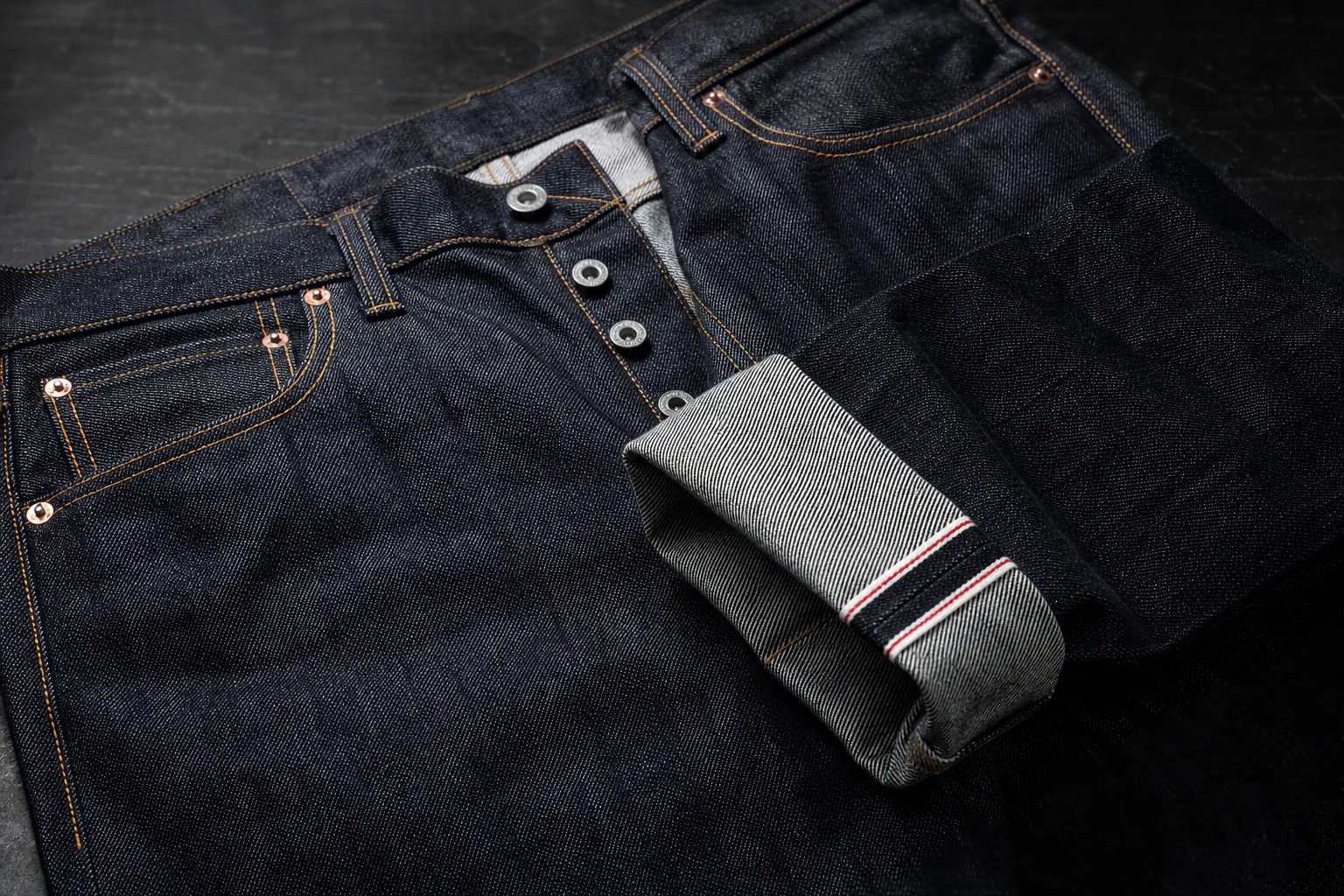
Most denim gets washed, sanded, or chemically treated after dyeing to soften it and fade specific areas before it ever reaches a store. Raw denim skips all of that. The fabric keeps its full stiffness and its full indigo color, and every crease, fade, and wear mark that develops afterward comes from actual use rather than a factory process.
That's the entire appeal. A pair worn daily for six months develops fades at the knees, the thighs, and the back pockets that map to how that specific person sits, walks, and carries a phone or a wallet. Two people wearing the same raw jeans end up with different-looking pants within a year.
Buying your first pair
Fit matters more with raw denim than with almost any other pants purchase, because the jeans will loosen slightly as they break in and mold to your body. A few guidelines:
- Buy them snug, not comfortable. Raw denim without stretch typically relaxes half a size through the waist and thigh within the first few wears.
- Look for a mid-weight fabric, somewhere in the 12 to 14 ounce range, for a first pair. Heavier weights hold fades longer but take more effort to break in.
- Pick a straight or slim-straight cut if you're not sure yet. It pairs with more of a wardrobe than a skinny or a wide-leg cut does.
- Stick to a dark, unwashed indigo for the first pair. Colored or heavily slubby denim is a second-pair decision once you know you like the process.
Selvedge is a construction detail, not a requirement
Selvedge denim comes from older, narrower shuttle looms and leaves a clean, self-finished edge along the outer seam, usually shown off with a small cuff at the ankle. It's a mark of how the fabric was woven, not a guarantee of quality on its own. Plenty of excellent raw denim isn't selvedge, and plenty of selvedge denim is mediocre once you look past the edge. Buy for weight, cut, and color first. Treat selvedge as a bonus detail, not the deciding factor.
The break-in period
The standard advice is to wear a new pair of raw denim for at least three to six months before the first wash. That sounds extreme until you understand why: every wash resets the fading process, softening the fabric and blurring whatever creases have started to form. Waiting lets those creases set permanently before water touches them.
During that stretch, expect some stiffness for the first week or two, fading along natural crease points like the back of the knee and the top of the thigh, and a slightly awkward fit that gradually loosens into something closer to a second skin. Freezing the jeans between wears is a popular myth for killing odor, but it does nothing that airing them out overnight won't also do.
Washing without ruining the fades
When the first wash finally happens, a few habits protect the work you've put in:
- Turn the jeans inside out before washing, to protect the surface fades from friction against other fabric.
- Use cold water and a gentle cycle, or hand wash in a sink if you want more control over the process.
- Skip the dryer. Hang them to air dry, ideally out of direct sun, which can fade the indigo unevenly.
- Space washes out. Once broken in, most raw denim only needs washing every few months, not every few wears.
What to wear them with
Raw denim in a dark, unwashed indigo is close to a neutral once it's part of the rotation. A plain crewneck tee and clean white sneakers is the simplest pairing and one that works in nearly any casual setting. Add a field jacket or flannel overcoat once temperatures drop, using the same principles we cover in layering for fall. For a slightly dressier read, an oxford shirt with the sleeves rolled and a pair of leather boots moves the same jeans toward business casual without changing anything else in the outfit.
If you're building the rest of a wardrobe around a first pair of raw denim, our capsule wardrobe guide covers which other pieces are worth owning alongside it. The jeans work hardest when everything else stays simple and lets the fades be the detail that stands out.
Bottom Line
Raw denim asks for patience up front and pays it back with fades that belong to no one else. Buy a snug, mid-weight pair in a dark wash, wear it hard for months before the first wash, and treat washing as a rare event rather than a weekly habit. More on the pieces that pair well with it live in our pants and denim coverage.